
talented individuals
with passion
Auctor augue mauris augue neque gravida in fermentum et. Fermentum iaculis eu non diam phasellus vestibulum. Lacus sed turpis tincidunt id aliquet risus feugiat in. Enim ut sem viverra aliquet.

What It Is, Why It Matters, and How to Perform It
Imagine a situation where a conductor in your home or business becomes damaged. In a fraction of a second, a very high current flows through the electrical installation. What should happen next? The protective device (commonly referred to as a fuse or circuit breaker) must disconnect the power supply immediately, protecting the building from fire and people from potentially fatal electric shock.
To make sure this protective mechanism works correctly and within the required time, regular testing is essential. One of the most important tests is the earth fault loop impedance measurement. In this article, we answer the key questions about this test. It is one of the core services provided by our company and has a direct impact on the safety of electrical installation users.
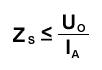
Earth fault loop impedance measurement involves determining the impedance of the fault loop and assessing whether its value is low enough to allow a fault current to flow at a level sufficient to ensure the automatic operation of the overcurrent protective device within the required disconnection time.
The meter applies a controlled, short-duration load to the circuit and, based on the measured voltage drop, determines the earth fault loop impedance value. This makes it possible to verify the effectiveness of protection by automatic disconnection of the power supply.
This test is a fundamental part of assessing the effectiveness of electric shock protection and confirming that the installation complies with applicable standards, including the multi-part PN-HD 60364 standard.
It is also worth remembering that regular inspections of electrical installations are a legal requirement. Under the Polish Construction Law (Article 62), periodic inspections of the technical condition of an electrical installation must be carried out at least once every 5 years.
In addition, the measurement helps identify irregularities such as increased circuit impedance, incorrect selection of protective devices, excessive cable length, inadequate conductor cross-section, loose connections, or deteriorated contact condition.
In practice, this is one of the key acceptance and periodic tests used to assess whether the disconnection conditions in the event of a fault are met in a way that ensures the required level of safety for the installation and connected equipment, which are often the source of sparking and fires.
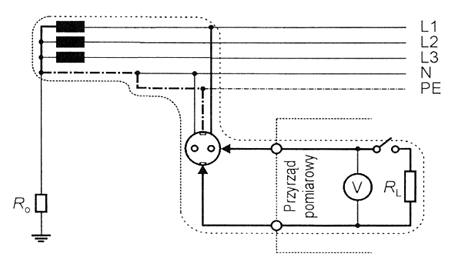
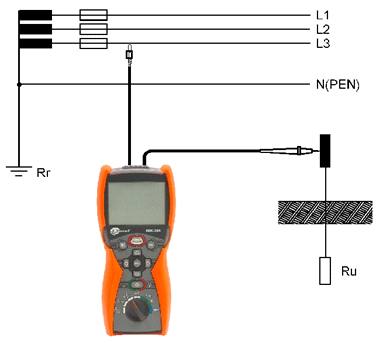
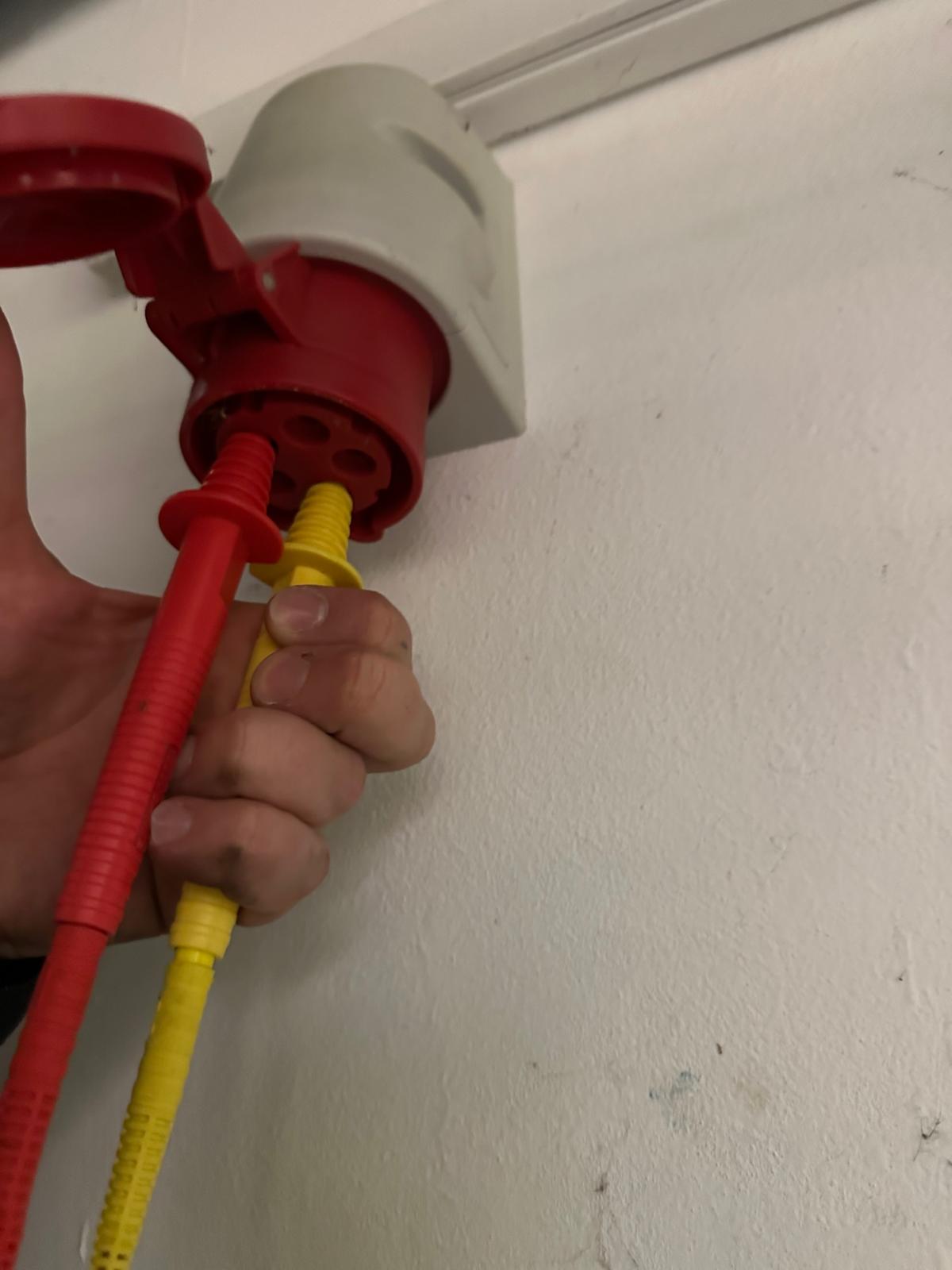
Earth fault loop impedance measurement is carried out using a suitable meter, in accordance with the instrument manufacturer’s requirements and the safety rules applicable to live working. The test is performed on a completed, energized circuit, because during the measurement the meter forces a short-term current flow and determines the loop impedance based on the resulting voltage drop.
In practice, the test involves connecting the measuring circuit between the phase conductor and the protective conductor PE or, depending on the purpose of the test, between the phase conductor and the neutral conductor N.
Before starting the measurement, it is necessary to check the correctness of the connections, confirm the presence of voltage, and verify that the test can be performed safely. The measurement function is then started on the meter, which automatically determines the earth fault loop impedance value.
The obtained result should be compared with the permissible value for the protective device used and the required automatic disconnection time. On this basis, it is assessed whether, in the event of a fault, the fault current will reach a level sufficient to trip the protective device within the required time.
This measurement should be performed by a properly qualified person, because it is carried out on a live installation and requires both compliance with safety rules and correct interpretation of the results.
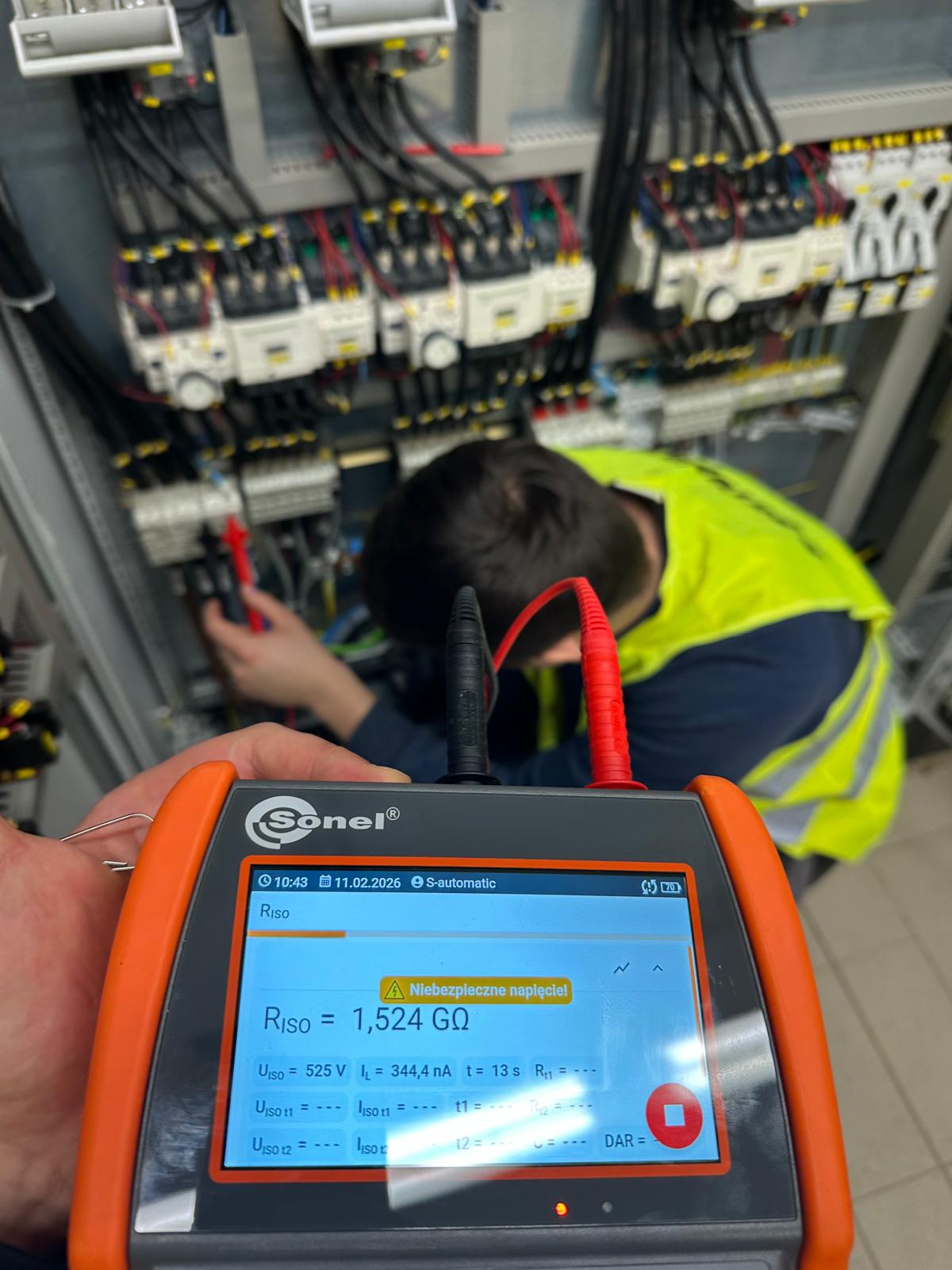
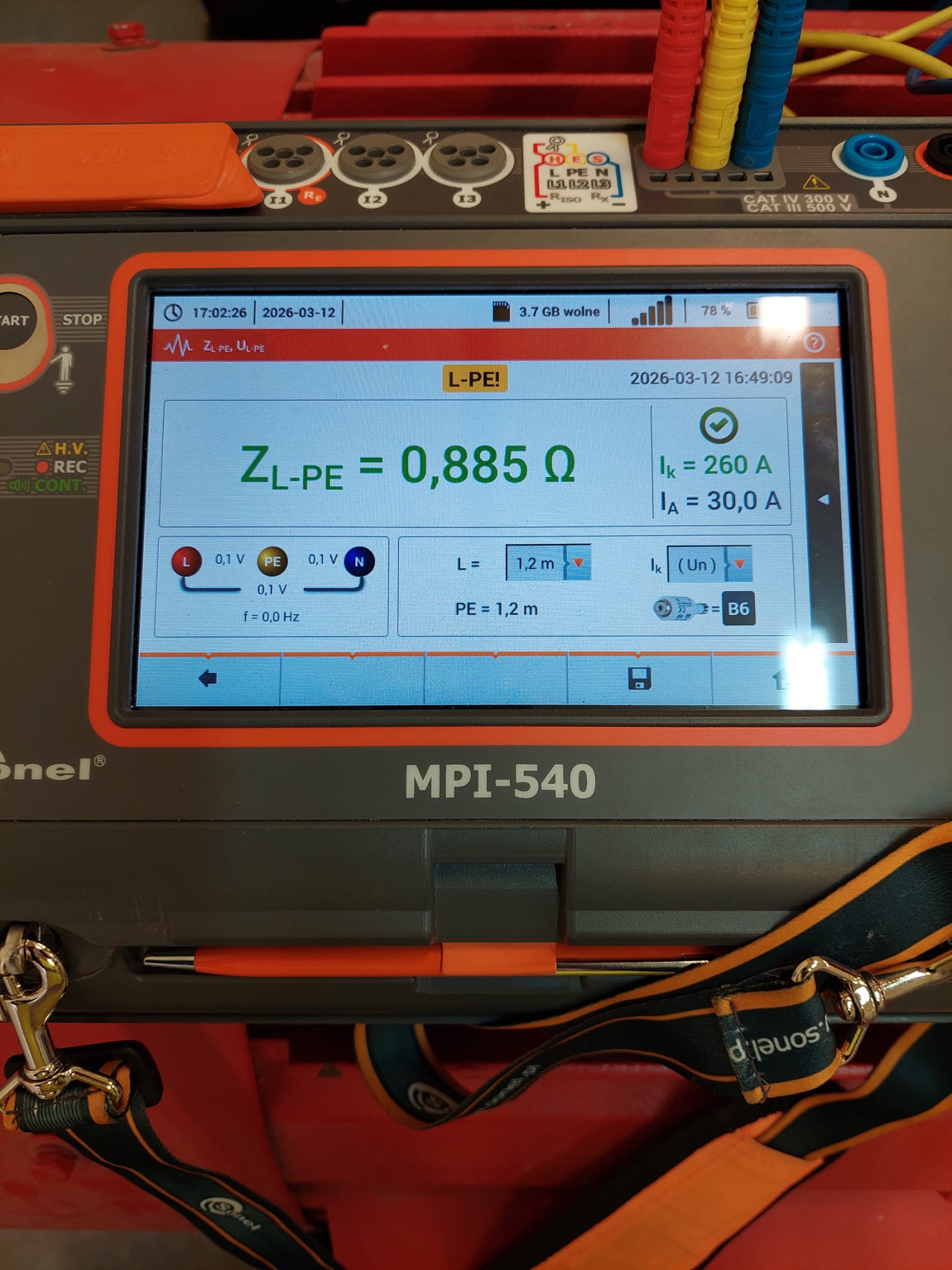
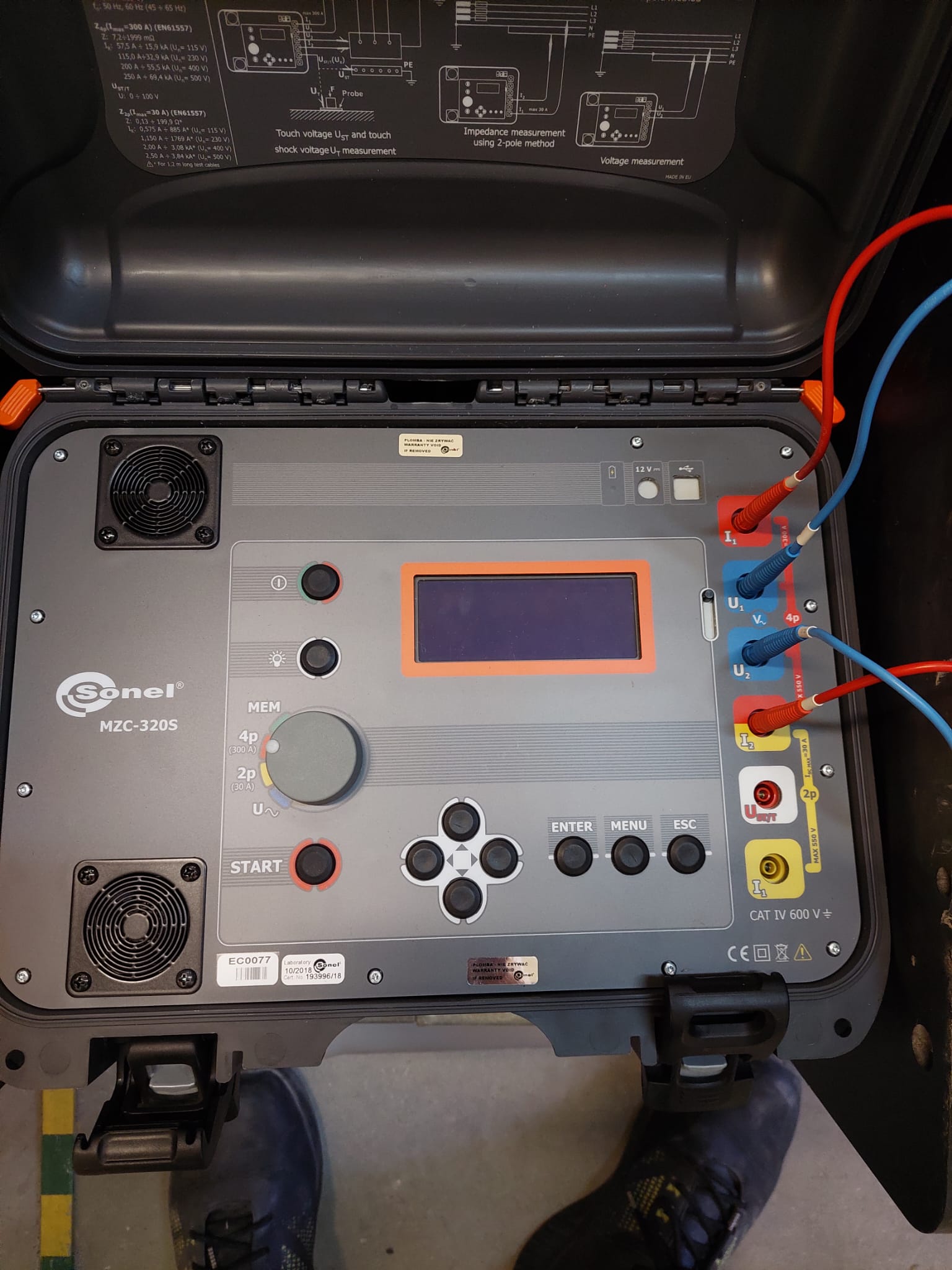
We mainly rely on one manufacturer of measuring instruments. Our choice is SONEL — a well-known brand on the Polish market, offering precise and fast measuring devices.
In our company, we use the following models:
Auctor augue mauris augue neque gravida in fermentum et. Fermentum iaculis eu non diam phasellus vestibulum. Lacus sed turpis tincidunt id aliquet risus feugiat in. Enim ut sem viverra aliquet.